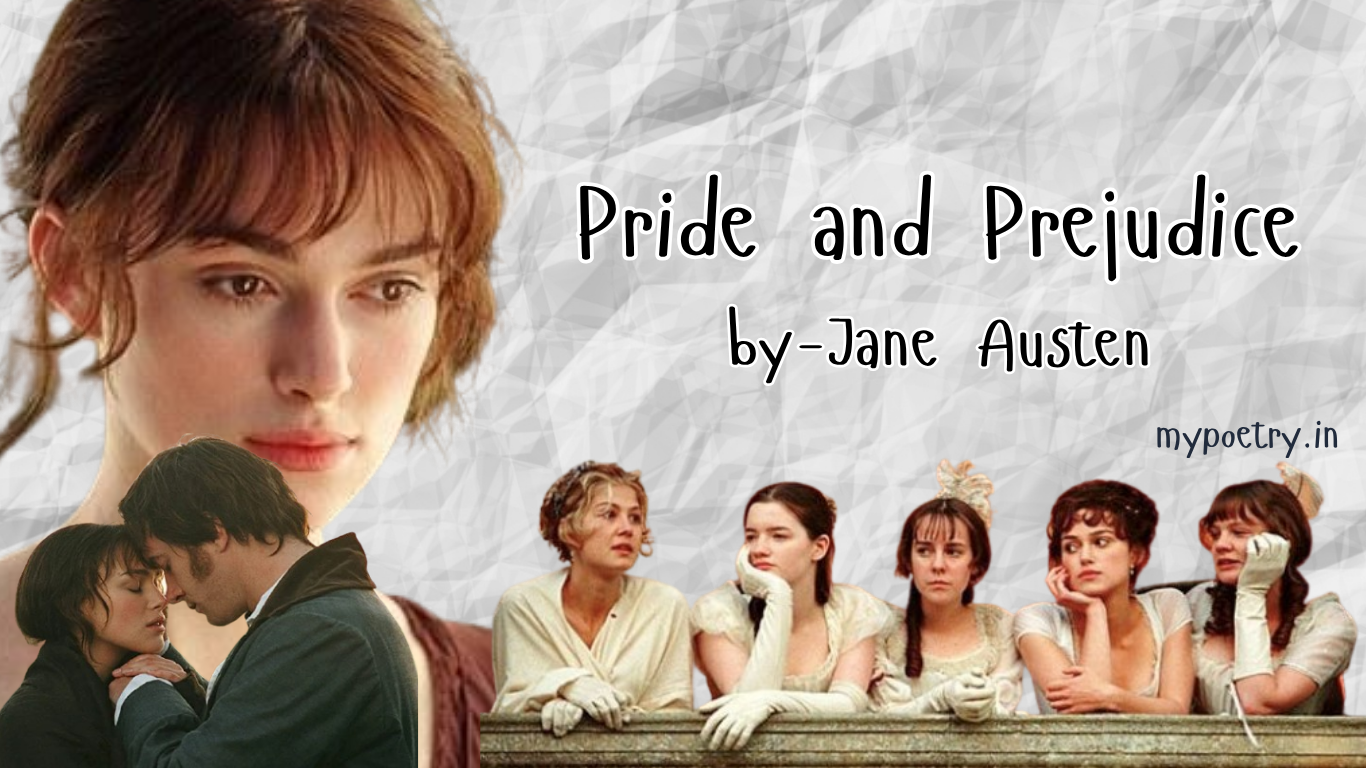
Pride and Prejudice is a novel of manners by Jane austen that explores themes of love, marriage, class, morality and personal growth in early 19th century England. The story centers on Elizabeth Bennet, an intelligent and sprited woman, and Fitzwilliam Darcy, a wealthy but reserved Gentleman. Through misunderstandings, social pressures, and personal flaws – especially pride and prejudice – the novel traces how both characters grow in self-awareness and ultimately find love.
Social Background and Opening Situation
The novel opens with one of the most famous lines in English literature:
“It is a truth universally acknowledged, that a single man in possession of a good fortune, must be in want of a wife.”
This ironic statement introduces the central concern of the novel-marriage and reflects the social realities of Austen’s time. Women of the middle and upper classes often depended on marriage for financial security, as property and inheritance laws favored men. The Bennet family lives at Longbourn in Hertfordshire. Mr. and Mrs. Bennet have five daughters-Jane, Elizabeth (Lizzy), Mary, Kitty, and Lydia-
-but no sons. Because of an entailment, the family estate will pass to a male relative, Mr. Collins, after Mr. Bennet’s death. Mrs. Bennet is therefore anxious to see her daughters married well.
The arrival of a wealthy bachelor, Mr. Charles Bingley, who rents Netherfield Park nearby, excites Mrs. Bennet and sets the plot in motion.
Introduction of major Characters
at a local ball, the Bennet family meets Mr. Bingley and his friend, Mr. Fitzwillam Darcy, Mr. Bingley is handsome, cheerful, and sociable, and he quickly becomes interested in Jane Bennet, the eldest and most beautiful of the bennet sisters.
Mr. Darcy, however, makes a poor first impression. He is wealthy and well-connected but appears proud, aloof, and dismissive of the local people. At the ball, Elizabeth overhears Darcy, refuse to dance with her, calling her ‘tolerable, but not handsome enough to tempt me.” This deeply offends Elizabeth and forms the basis of her prejudice against him.
Elizabeth, in contrast to Darcy, is lively, witty, and independent-minded. She values intelligence and character over wealth or status, which sets her apart from many women of her time.
Growing Relationships and Early conflicts
Jane and Bingley’s relationship develops quietly and naturally. Jane is gentle, kind and reserved, while Bingley is good-natured and eager to please. However, thier romance faces interference from Bingley’s sisters and Darcy, who believe Jane’s family is socially inferior and that Jane does not genuinely love Bingley.
Meanwhile, Elizabeth becomes friendly with George Wickhem, a charming militia officer stationed nearby. Wickhem tells Elizabeth a false story about Darcy, claiming that Darcy wronged him by denying him an inheritance promised by Darcy’s father. Elizabeth readily believes Wickham because his account confirms her negative opinion of Darcy.
At that same time, Mr. collins, the Bennets’ absurd and pompous cousin, visits Longbourn. He intends to marry one of the Bennet daughters to ‘make amends’ for inheriting their estate/ He proposes to Elizabeth, but she firmly refuses, despite her mother’s anger and insistence that she accept. Elizabeth’s refusal demonstrates her strong sense of self-respect and belief that marriage should be based on love, not convenience.
Mr. Collins soon proposes to Charlotte Lucas, Elizabeth’s practical and sensible friend. Charlotte accepts, believing that marriage is primarily about financial security rather that romance. Although Elizabeth is disappointed, she understands Charlotter’s descision and recognizes the limited choices available to women.
Seperation and Misunderstanding
Jane is invited to stay in London with Bingley’s sisters, but they deliberately prevent her from seeing Bingley. Eventually, Bingley leaves for London, apparently abandoning his interest in Jane. Jane is heartbroken but hides her feelings, while Elizabeth becomes angry with Darcy, suspecting him of interfering.
Elizabeth later visits Charlotte and Mr. collins at their home in Kent, near the estate of Lady Catherine de Bourgh- Darcy’s aristocratic aunt. During the visit, Elizabeth frequently encounters Darcy, who is staying nearby. Gradually, Darcy begins to admire Elizabeth’s intelligence, honesty, and lively personality, despite her lower social status.
Darcy’s feelings deepen, and he unexpectedly proposes to Elizabeth. However, his proposal is deeply flawed. he expresses love for her but emphasizes how difficult it is for him to overcome her family’s social inferiority. Elizabeth is outraged. She rejects him angrily, accusing him of arrogance, cruelty toward Wickham, and of seperating Jane and Bingley.
This is a turning point in the novel.
Darcy’s Letter and Elizabeth’s Self-Reflection
After the rejected proposal, Darcy gives Elizabeth a letter explaining his actions. In it, he reveals the truth about Wickham; Wickham Squandered His inheritance And later attemp to elope with Darcy’s young sister, Georgiana, For her fortune. Darcy also Adm he separated Pingley and Jane because he believed Jane did not truly love Bingley and wanted to protect his friend.
Elizabeth reads the letter carefully and there goes a painful but Important self-realization. She recognizes her own prejudice and admits she just Darcy unfairly based on the first impressions and Wickham’s lies. This moment mark Alabama’s moral growth and the beginning of her changed feelings towards Darcy.
Lydia’s Elopement and Family Crisis
Elizabeth return home, Where events takes a dramatic turn. Her youngest sister, Lydia, Who is foolish, flirtatious, and Irresponsible runs away with Wickham. Because they are not married, The scandal threatens to ruin the reputation and marriage prospects of Bennet sisters.
The family is Devasteted. Mr Bean and searches for media But face to find her. Unknown to the bennetts, .c secretali intervenes. He tracks Lydia in London and Base Wickham’s debts, persuading him to marry Lydia. Darcy does this out of love for Elizabeth and a sense of responsibilty, without expecting any reward or recognition.
Elizabeth learns of Darcy’s actions from his aunt and is deeply moved. Her feelings toward Darcy Transform into admiration and gratitude.
Resolution of Jane and Bingley’s Romance
Bingley eventually returns to Netherfield, accompanied by Darcy. This time, Darcy doest not interfere with Bingley’s feelings for jane. Bingley proposes to Jane, and she happily accepts.Their marriage represents a harmonious and affectionable union based on mutual respect and geniune love.
Mrs. Bennet is overjoyed, as Jane’s Marriage ensures finanical security for at least one of her daughters.
Elizabeth and Darcy’s Final union
Despite their renewed feelings, Elizabeth and Darcy still face obstacles. lady Catherine de Bourgh visits Elizabeth and demands that she promise never to marry Darcy, believing that Darcy is destined to marry her own daughter. Elizabeth firmly refuses, asserting her independence and right to choose her own happiness.
Encouraged by Elizabeth’s refusal and her changed behaviou toward him, Darcy proposes again- this time humbly and respectfully. He expresses gratitude for Elizabeth’s honesty, which helped him overcome his pride. Elizabeth accepts, acknowledging how both of them have changed and grown.
Their engagement brings the novel to a satisfying conclusion. Elizabeth and Darcy’s marriage symbolizes the triumph of love based on understanding, equality, and moral growth.
Themes and conclusion
Pride and prejudice explores several key themes,
- Pride – Darcy’s excessive pride initially blinds him to the value of the others.
- Prejudice- Elizabeth’s quick judgements prevent her from seeing Darcy’s true character.
- Marriage= Austen presents various models of marriage- from Practical( Charlotte and collins) and to foolish (Lydia and Wickham) to ideal (Elizabeth and Darcy).
- Social Class – The novel critiques rigid class distinctions while acknowledging their influence.
- Personal Growth- Both Elizabeth and Darcy must confront their flaws to achieve happiness.
By the end of the novel, pride is humbled, prejudice is overcome, and genuine love is achieved through self-awareness and moral improvement.