ACT I
Act I , Scene I: The Ghost of the late king of Denmark
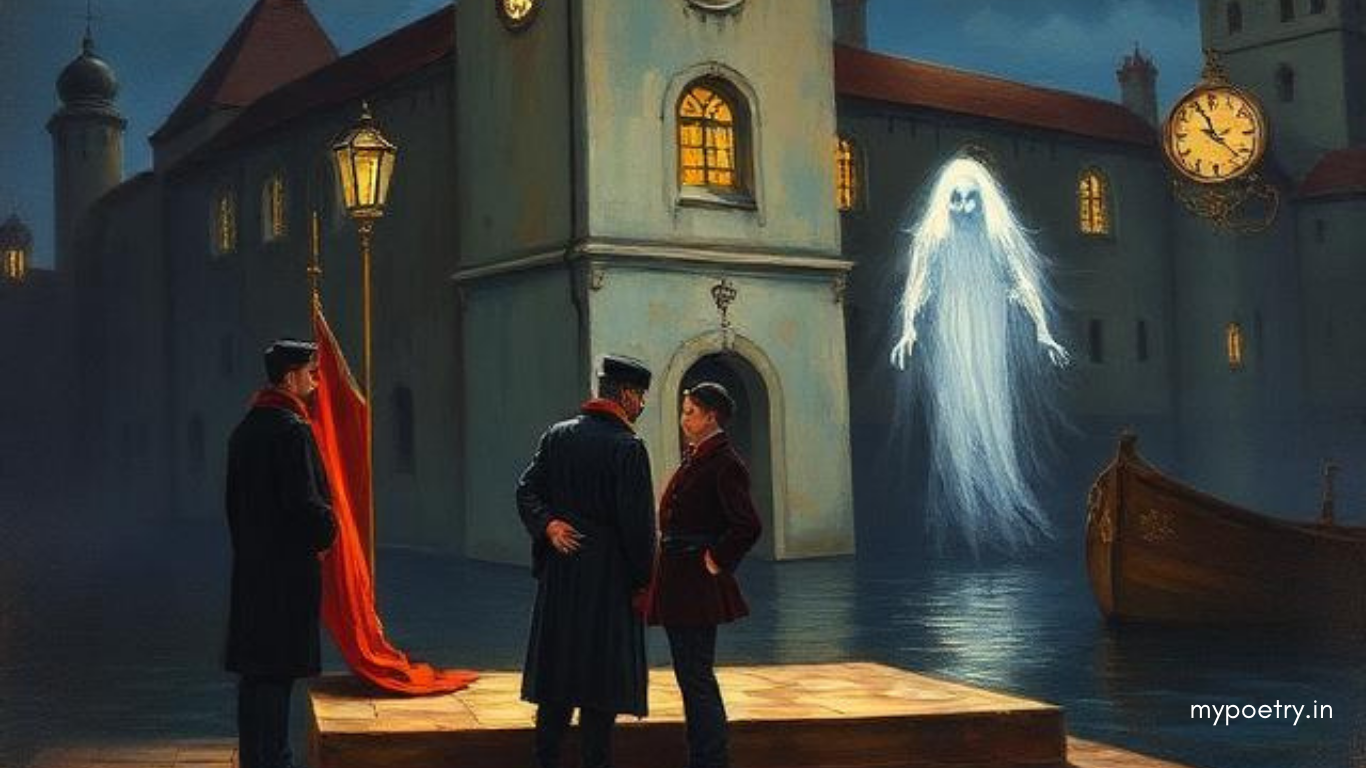
The play opens at Elsinore with Francisco at his post on a platform before the castle. Barnardo comes to relieve him of guard duty. It is the hour of 12 in the night, Horatio and Marcellus arrive. Fransisco leaves and Marcellus asks Barnardo if “this thing” (meaning the ghost) his appeared again, but Barnardo says him has seen nothing so far. Just then the ghost enters. It is the Ghost of the dad king of Denmark. Horatio speaks to the ghost but hte Ghost moves out of the sight, looking offended. Horatio remarks that the ghost had appeared in the same armour which the late King had been wearing when he had fought the King of Norway and when he had smitten”the sledged Polacks on the ice”. Marcellus says that the Ghost had appeared twice before at the same hour. Horatio says that the apppearance of the Ghost two that Denmark faces a threat of war from young Fortinbras , of Norway. Fortinbras has demanded the return of the lands which his father had lost to Denmark. Bernardo thinks that the appearance of the Ghost is a portent of the war that seems to be impending. Horatio recalls how the assassination of Julius Caesar had been preceded by a number of supernatural occurrenses.
The Re-appearance of the Ghost : The ghost re-appears. Horatio repeatedly asks that the Ghost to speak and say something but just then the cock crowing, the ghost makes its exit. Horation explains that at cock-crow all spirits and ghosts go back to theri proper places. Horatio suggests that they should inform Hamlet of what they have seen because the Ghost which refused to speak to them, would definitely speak to Hamlet. The others agree to this suggesstion.
Critical Comments on Act I, Scence I ‘Tension, Supernatural Mystery
There is a tension in the opening scene with Francisco Feeling nervous and then feeling much relieved at Bernardo’s arrival. It is bitter cold and Francesco is sick at heart. An element of mystery is introduced when Marcellus asks ” What, Has this thing appeared again tonight?” Horatio Is the sceptical Scholar who will not believe in the existence of a ghost unless he sees it with his own eyes. Appearance of the ghost constitutes an Important supernatural element in the play. The supernatural element is heightened when Horatio refers to the strange things that were witnessed in Rome before the Assassinations of Julius Caesar.
The graves stood tenanatless, and the sheeted dead
Did squeak and gibber in the Roman streets (Lines 115-120)
Information Provided by this scene
In this scene also supplies some information regarding the world like nature and villarreal of the late king who had killed the Norwegian monarch. It is against that background that young Fortinbras of Norway now threatens to invade Denmark. The appearance of the cost is regarded as a kind of evil omen For the state of Denmark. The tension of the scene is relieved when Horatio says that the hour of dawn has arrived.
But look, the Morn, in russet mantle clad,
Walks o’ver the dew of yon high eastern hill (Lines 166-167)
The ghost as a Portent
Both Bernardo and Horatio accept the ghost as a portent. Or as foreshadowing a coming event. The belief that disturbances in nature for tale and accompany disturbances in human affairs has its source in astrology and religion, And this belief was current in Shakespeare’s day. In line 170, the hero’s name is introduced to us; “Let us impart what we have seen to night/ unto young Hamlet.” What will Hamlet think of his father’s unquiet spirit? Thus, the action is laid forward to the meeting of Hamlet and Horatio. The first scene leaves us with a haunting sense of unexplained evil troubling both the dead and the living.
Act I , Scene II: The Messengers sent to the King of Norway
This scene opens in a room of estate in the castle. Enter the King, the Queen, Hamlet, Polonius , Laetres, and others. The king speak of his marriage to the widowed queen. The marriage, he says, has been solemnised ‘as it were with a defeated joy’ Because the memory of the dead king is still fresh in their minds. He then refers to the threat of aggression that Denmark faces from young Fortinbras Who has demanded the return of the territory that young Fortinbras father had lost to the King of Denmark. He enters two courtiers Cornelius and Voltimand With the duty of carrying a dispatch from him to king of Norway Who will be asked to restrain his nephew, Young Fortinbras from embarking upon his reckless adventure. Cornelius and Voltimand Departs, And the king turns to Laertus, Who seeks the king’s permission to return to France from, Where he had come to Denmark to participate in the present Kings coronation. The King asked Bolognese if he has permitted his son’s letters to go back to France, and on his replying that he, as the King, grants the request of Laetrus.
Hamlet, Questioned by the King and the queen
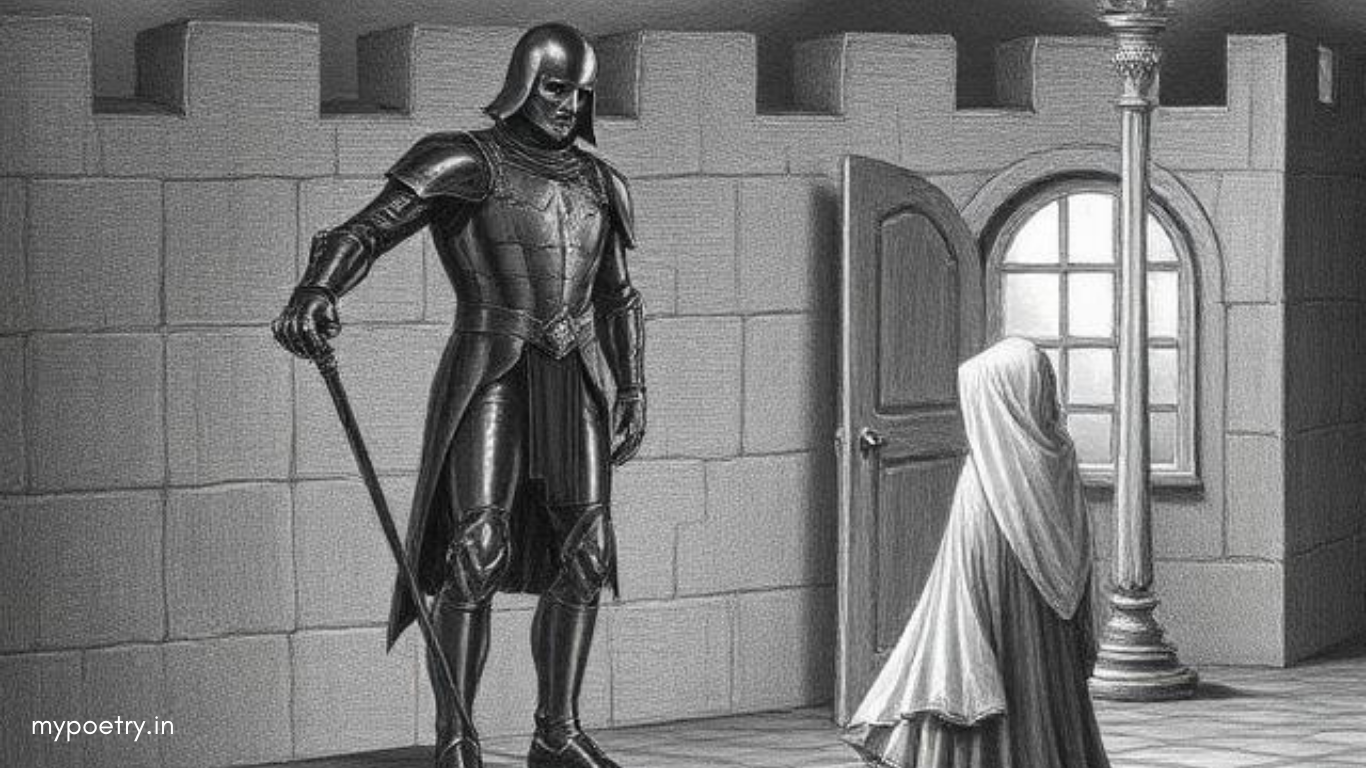
The King now speaks to Hamlet and asks why Hamlet is still depressed. The Queen urges Hamlet to cast off his melancholy because all human beings must die, and because Hamlets father too, was to die one day. Hamlet speaks of the griff that is oppressing him, but his manner of speaking to the King – his uncle – and the Queen – his mother- is bitter and sarcastic. The King praises Hamlet for his dutiful grief over his father’s strength, but urges him not to persist in his grief. It is not only unmainly to grieve over what is inevitable, but a challenge to the will of heaven. He further urges Hamlet to look upon him as a father and Offered to him, let all the love that a father can feel for his son. He also disapproves of Hamlet’s intentions to go back to the University of Wittenberg to resume his interrupted studies, and Wants him to stay on here as his chiefest courtier, Cousin and son. The Queen joins the king in this advice to embrace, who replies that he will obey her. The king expresses his joy at this’ loving’ Reply and retirees with the Queen and the others. Accept Hamlet who is left alone.
Hamlet’s Grief at His mother’s Re-marriage
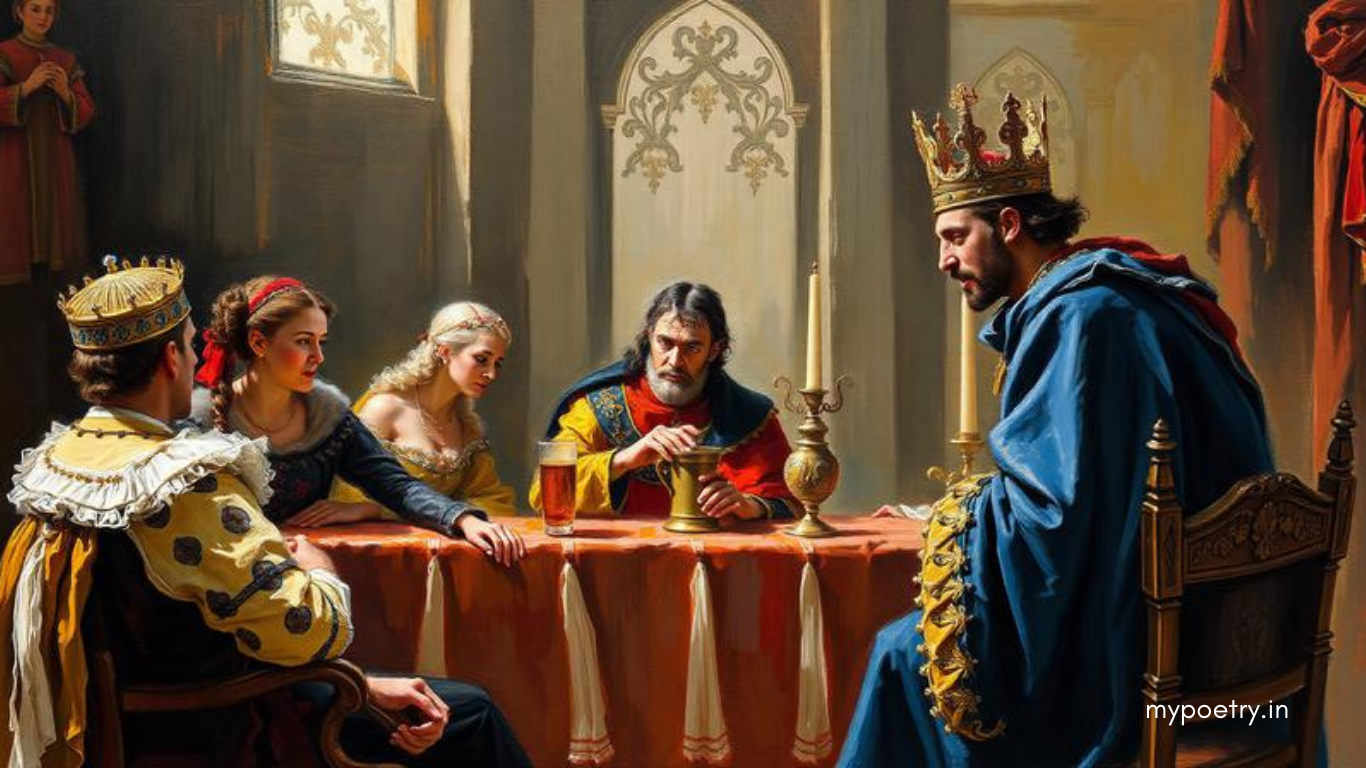
In Asolaki, Hamlet speaks of the death and suicide. The world seems to him very still, flat and unprofitable. He deplores the fact that his mother has remarried barely two months after the death of her husband, who was an excellent king and was to her present husband as Hyperion to a satyr. “Frailty, thy name is woman!” he says. Even a beast would have mourned for a longer. than his mother had done. He strongly condemns this husty and incestuous marriage.
Hamlet informed about the appearance of the Ghost
Horizio, Marcellus and Bernardo arrive, And tell him that what they’ve seen during the night and what Marcellus and Bernardo had seen during the two previous nights. Hamlet is surprised and perplexed By what he is told and he tells them that he would visit this spot (Where the Ghost had appeared) At night during the hours of 11 and 12 to meet the ghost if it appears again. In Brief, soliloquy, Hamlet expresses his apprehension that if his father’s ghost appeared in war like Garb, All is not well.
Critical Comments on Act I, Scene II: Hamlet’s Character Revealed
The scene supplies some vital information regarding the marriage of Hamlet’s widowed mother to Hamlets uncle, who has ascended the throne of Denmark. We here made Hamlet the hero of the play. The two most striking qualities of his character, as revealed in the scene, are his melancholy and his speculative nature. His Marancoli has been noticed by the King and the Queen, and his speculative nature appears in his two soliloquies. We also find that Hamlet has a strongly resented his mother’s marrying His uncle with such indecent haste. He considers this marriage to be an incestuous relationship. Furthermore, we find that Hamlet is capable of employing bitter irony and sarcasm In his conversation. He is also capable of employing a pun” Too much in the sun” has a double meaning.
Our Unfavourable impression of the King and the Queen
We form an unfavorable impression of both the King and the Queen. The Queen is no doubt very savlicious about the welfare of Hamlet, but the indecent has with which she has remarried lowers her in our estimation. As Hamlet puts it, ” O God! a beast that wants discourse of reason, Would have mourned longer.” His mother’s heart. Daily marriage makes Hamlet generalized thus: Frailty, thy name is woman!. As for the King Hamlet’s uncle, Hamlet speaks very contemptuously About him and his soliloquy. He compares his late father to Hyperion, And his uncle to a satyr. But we must note the King’s courteous, and even unctuous, Manner of speaking. Hamlet’s soloquies Show not only is reflective and speculative nature, but also his poetic nature. Our learning that his late father’s ghost has been seen by Horatio and others, he suspects some foul play, a suspicion that is subsequently confirmed.
Hamlet’s first Soliloquy
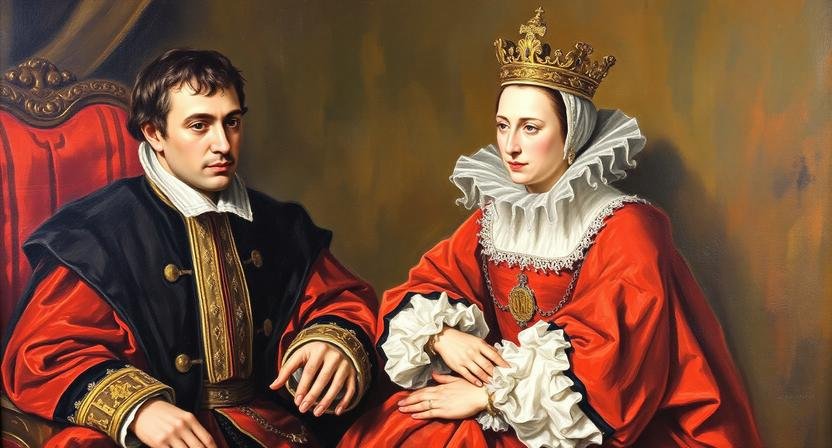
Hamlet’s first Soliloquy Is designed to show his state of mind before his interview with the ghost. He is profoundly shocked by Gertrude’s marriage to his uncle in less than two months after her first husband’s death. Although he has no conscious suspicion that his father had been murdered or that his mother had committed adultery. He wishes that suicide were permissible. He compares the world to Eden after the fall. Hey, contrast, get roots. Two assumes that all women are like his mother. ” Frailty, thy name is woman!” We learned later that the melancholy and disillusionment apparent in this soliloquy I’m not part of his normal state of mind. It is necessary to emphasize this because those critics who form a low opinion of his character tend to forget that his behavior in the play is partly Explicable By the successive shocks he receives.
Several Strands in This Soliloquy
Before his mother’s second marriage, Hamlet had in Ophelia words. “A noble mind”, “the courtyard’s soldier’s scholars Eye, tongue, sword . he was:
The expectancy and rose of the fair state,
The glass of fashion and the mould of form, (III, 154)
A man with a novel and most sovereignty region. In other words, he was an ideal Renaissance nobleman. An idealist with an unbounded delight and faith in everything good and beautiful. But the discovery of his mother’s lust and The fact that the kingdom is in the hands of an unworthy man shatters his picture of the world, the estate and the individual. His sense of evil in all three spirits is closely interwoven in his first Soliloquy. In which he first thinks of the general rottenness ( “How weary, stale, flat, and unprofitable/Seem to me all the uses of this world!”) , then passes to a consideration of the excellence Of his father as king compared to his satyr Like uncle and finally dwells on his lustfulness of his mother who has violated the natural love by the brevity of her grief and the hastiness of her marriage. ” O God! a beast, that wants discourse of reason,/ Would have mourned longer.” In other words, in first presenting him led to his audience. Shakespeare uses an interwoven series of references to the word, the state and the individual.
Act I, Scene III: Polonius’s Exhortation to His son Laerts
This scene opens in a room in Polonius House. Enter Lighters and Ophelia. Laertes is ready to depart for France. He disapproves of Ophelia’s encouraging Hamlet’s advances to her. Perhaps Hamlet loves her now. Says Laertes, But he may not able to marry her because, Being the heir To the throne, he h May not be able to exercise a free choice in this matter. He urges her to become more cautious in her dealings with Hamlet. Ophelia promises to bear her brother’s advice in mine and in return exhorts him to follow the path of self restraint when he is abroad. Polonius comes and utters a few percepts for Laertes to follow when he goes to France. “Be thou, familier, but by no means vulgar”. “Beware of entrace of quarrel”. “Give every man thine ear, but few thy voice,””Neither a borrower nor a lender be.” “this above all: to thine ownself be true.” Laertes departs, And Polonius turns to his daughter to whom he expresses the same distrust of Hamlet’s love for her as her brother had expressed. He bids her categorically Not to have anything to do with Hamlet in future.
Critical comments on Act I, Scene III: A domestic Scence with Comic Touches
This is a domestic scene which throws some light on the characters of Laertes, Polonius and Ophelia. Laertes Is a very affectionate brother who feels much concerned about the welfare of Ophelia. Obviously he has not been able to judge him that’s character arrived because he thinks that the Prince might besmirch His sisters honour. Polonius utters a number of maxims which no doubt contains sound common sense and valuable advice but with far from creating an Impression in US of Polonius wisdom or profundity, give us The feeling that they have merely been memorized by him for such occasions. Polonius produces a near comic effect by the advice he gives and by his garrulous manner. Ophelia is a very simple minded girl who gives correct answers to her father’s questions and who shows her submissive nature by telling her father that she will obey his injunction not to encourage Hamlet’s advances.
Act I , Scene IV : The ghost , Seen by Hamlet
We are taken back to the platform before the castle. Hamlet Horatio and Marcellus at the spot. Hamlet informs his companions that the king is busy merry making in the company of his courtyards and he goes on to comment upon the character of men who having many virtues may yet degrade themselves because of a single blemish. The ghost appears, and Hamlet speaks to it, asking It to explain what its appearance signifies. The ghost makes a gesture to Hamlet to follow it. Obviously the ghost would Like to speak to Hamlet privately. Horatio and Marcellus dissuade Hamlet from the following ghost. But Hamlet disregards their advice and follow the ghost.
Critical comments on Act I, scene IV: Character revelation , Atmosphere of horror
Here we learn a little more about the character of the King who is described by Hamlet as a confirmed drunkard. Hamlet’s contemplative nature and his tendency to generalize are emphasized in this scene when he speaks of A man of many virtues Degrading himself by a single defect of character. As Hamlet himself suffers from a single defect(namely irresolution) His speech here gains ironical faults from its unconscious self revelation. h The atmosphere of horror is again created when the ghost appears once more. We are filled with great apprehension when we find Hamlet deciding to follow the ghost. h The comment on Marcelious “Something is rotten in the state of Denmark.” is significant.
Act I, Scence V: Ghost’s Disclosure to Hamlet
Hamlet learns from the coast the Manor in which his late father had me his death. h According to the ghost, “It was mother’s most foul, strange and unnatural.” h It had been given out that, While sleeping in his orchard, Hamlets father had been bitten by a serpent and had died of serpent’s sting. the truth of the matter, however, Was that his brother who now wears his crown and has wedded his wife, had killed him by pouring poison into his ear as he slept in th orchard. The coast speaks in very strong terms about the wickedness of the murderer(Who is now the king) End of the conduct of his wife in having married with that man. The ghost refers to the present king as ” that incestuos, that adulterate Beast” and calls upon Hamlet not harm the Queen. The ghost would like Hamlet to leave the Queen to be punished by heaven and by her conscience which is sure to torment her for her infidelity. The coast then departs. Living Hamlet shop and stunned by the strain disclosure. in a solioquy, Hamlet Plaza himself not to forget the ghost of the ghost’s words. His mother now appears to him in a much uglier light and he calls her a most pernicious woman, While his uncle whom he already hated is a villain, “smiling, damned villian”. Horatio and Marcellus now join Hamlet and ask him what the ghost has said to him, but He puts them off. However, He tells them that he will, From how on , Put on “an antic disposition” , and Will behave and talk as if he had gone crazy. He then binds them to secrecy about what he has told them and, as they leave, He says to them
The time is out of joint, – O cursed spite
that ever I was born to set it right. (Lines 189-190)
Critical comments on Act I , Scene V: The great importance of this scene
This is obviously the most important scene in the first act. The disclosure made by the Ghost to Hamlet forms the very basis for the action of the rest of the play. mellon collie and depressed Though Hamlet had been feeling even before the ghost has spoken to him, He had never suspected his uncle of having murdered his father( or his mother of adultery). A grave responsibility Now rests upon Hamlet’s shoulders. He has to avenge his father’s murder. He seems to be almost conscious of his incapacity for the task imposed upon him because in the closing speech of this scene he feels sorry that he has to say it right the time which is “out of joint”. This scene throws much light on the character of the present king who, we learn, Is a perfect villain. In the ghost speech, We get a brief contrast between the character of the Blade King and that of the present king. We begin to hate this villain as much as Hamlet hates him. Another very important point in this scene is that Hamlet decides to pretend that he has gone mad. As there is a lot of controversy about the nature of him that’s madness(h Whether it is feigned or genuine), his telling Horatio and Marcellus that he will from now on put on an “antic dispostion” Should serve as valuable evidence to support the view that Hamlet does not actually go mad.
ACT II
Act II, Scence I: Polonious’s Instructions to His servant
These Saints open in a room in Polonious’s house , With Polonius speaking to his servant Reynaldo Who is going to France to deliver some money and papers to Polonious’s son, Laertes. Polonius ask Reynaldo To bring him complete information regarding his son’s mode of life and his activities. He asks Reynaldo To collect all possible information about Leartes From various sources without letting Leartes Now that he is collecting such information. Polonius gives to Reynaldo The freedom to question people of Laertes’s acquaintance and to Encourage them to reveal the true facts about Laertes, by himself Throwing out hints suggesting that Laertes is Is addicted to certain bad habits like gambling, Drinking, Swearing and quarreling.
Ophelia’s Account of Hamlet’s Strangle Behaviour
Reynaldo Leaves end of Ophelia enters. Ophelia tells her father that she is feeling terribly frightened because Hamlet has visited her in a strange disordered condition with His doublet xh Unbraced with no hat upon his head with his stockings ungartered, and with a piteous look in his eyes. Polonius interprets this description as showing that Hamlet has gone made on account of the disappointment caused to him by ophelia’s rejecting his advances under her father’s orders ( h It will be remembered that in act first scene 3rd Polonius had exhorted his daughter not to have anything more to do with Hamlet). Polonius now regrets having regarded Hamlet’s courtship of Ophelia as mere flirtation. However he decides to apprise The king of this Development, namely , Hamlets condition which he considers to be a love madness, “the very ectasy of love”.
Critical comments: Polonius character further revealed
This Scene throws some further light on the character of Polonius. He is a suspicious and cunning man. He is setting a spy on his son who has been in France for some time. He wants this spy secretly to gather all possible information about Laertus mode of living. He even suggested that Ronaldo while questioning persons of Laertus acquaintance, Should throw out hints that Laertus was addicted to certain bad habits. Obviously Polonius is an unscrupulous man.
Hamlet’s Madness: real of feigned?
Ophelia’s description of Hamlet’s condition suggests that Hamlet has suffered what may be called a mental collapse. It seemed to Ophelia that Wen Hamlet appeared before her, ” He had been loosed out of hell to speak of horrors. hh This has been taken to indicate that Hamlet’s madness is genuine. It is argued that Hamlet has no reason to torment Ophelia with feigned madness. It is also said that whenever Hamlet feels madness, His condition is from moments of genuine madness. When he films madness, His remarks and his answers to other people’s questions Show a characteristic wit so that even Polonia sees a method in this madness. His way of speaking in moments of fiend Venice is what TS Eliot Calls ” The buffoonery of an emotion which can find no outlet in action.” What we hear in this scene from Ophelia is something very different
It is held by some critics that because the only person from whom he could expect some sympathy, namely Ophelia, has rejected Him in obedience to her father’s directive, Hamlet’s mind is actually unhinged. But this is a debatable point and has been discussed at length elsewhere in this book Polonius now fails convinced that his explanation of Hamlets destruction as being due to his love for Ophelia was right.
Act I , Scene II: Two Courtiers, Deputed to probe Hamlet’s Mind
We are now taken to our room in the castle, Where we meet the King the Queen Rosencrantz, Guildenstern, and a number of attendants. The King tells Rosencrantz, Guildenstern that he has summoned them in haste as he needs their services. He tells them that hamlet has undergone a strange transformation, both outward and inward, and that it is not clear what, apart from the grief of his father’s death, has caused this transformation. The king wants these two courtiers, who were brought up together With Hamlet, To try to find out what is affecting Hamlet. The Queen makes a similar request to the two courtiers who read readily offer their services in this context and accept the task interested to them. When they leave Polonius enters. He informs the king that Cornelius Voltimand have returned from norway with good news. Polonius then brings the two envoys to the king’s presence, And they communicate to the king the welcome news that the King of Norway has effectively restaurant young Fortinbras from going to war with Denmark
Polonius’s interpretation of Hamlet’s Madness
Cornelius and Volti men then leave, And Polonius tells the king And the Queen his impression that Hamlet has gone mad, Attributing this madness to his daughter Ophelia’s rejection of Hamlet’s love. He explains how he had forbidden his daughter to encourage Hamlet’s advances and how she acted upon his advice. He also reads out one of Hamlets love letters addressed to Ophelia . Polone’s then suggests a device by which the explanation that he has given of Hamlet’s madness can be confirmed to be true. He and the King we’ll hide behind an arrays, While his daughter will meet Hamlet in the lobby as if by chance.
Method in Hamlet’s Madness , according to Polonius
the king and the queen then leave , While Polonius lingers there. Hamlets enters. Polonius begins a conversation with Hamlet, And Hamlet’s replies to Polonius questions and Hamlet’s other remarks convince Polonius that Hamlet is made though Polonius at same time finds that there is ‘method’ In Hamlet’s madness. When Polonius asked whether Hamlet recognized him Hamlet says that he does and calls pioneers a fishmonger. In reply to another question Hemlate says that “to be honest as this word goes is to be one man picked out of 10,000.” All Hamlets asking if Polnius has a daughter, Polonius says that he has, Whereupon Hamlet gives him the following piece of advice: ” Let her not work in the sun, Conception is a blessing, But not as your daughter may conceive:- Friend, look to it. ” On being asked Dubai Polone’s what Hamlet has been reading, The Prince replies that he has been reading slanders and says, That according to the satirical author whom he has been reading, ‘ Old men have Gray beards, Their faces are wrinkled , And they have a plentiful lack of wit, Together with most weak hams,”. Volunteers now take sleeve of Hamlet, Add The two courtiers, Rosencrantz and guildenstern enter.
Hamlet’s Correct guess about the two Courtiers
The visit from From Rosencrantz and guildenstern makes Hamlet at once suspicious. After an exchange of pleasantries, Hamlet asks them with what purpose they have come to meet him. It is clear says he, That they have been sent for, by the king and the queen and been instructed by them to call on him. The two courtiers confess that they were sent for. Hamlet says that he Can judge why they were sent for. He tells them that of that he has lost all his mirth and that, Although this world is beautiful to him it seems to be foul and repellent. Men’s Hamlet is an execute work of divine creation, But to him man appears to be nothing but dust. Neither man nor woman delights him , Hamlet adds. Rosencrantz Says that in such a mood, Hamlet will not be able to enjoy the performance of the players whom they have engaged to entertain him, but Hamlet says That the players would be welcome.
Hamlet’s Cryptic Remark about his Madness
After a little conversation about the players, Their fortunes and their prospectus, Hamlet speaks a few words of welcome to the two courtyards and tells them that the King and Queen are deceived about him saying, ” I’m but mad North north west: when the wind is southerly, I know a hawk from a hand saw.
The news about the arrival of a Company of Actors
Polonius enters again. He tells Hamlet that the actors have come and that ” They are the best actors in the world either for tragdey, comedy, history, pastoral, pastoral comical, etc. Hamlets replied to this is” O Jephthah, Judge of Israel, what a treasure hadst thou!” On being asked by Polonius what treasure Jepthath, He too has a daughter whom he loves very much. But Hamlet refuses to believe that Bolognaise loves his daughter very much.
The actors engaged by Hamlet to Stage a play
4 or 5 actors enter. Hamlet welcomes them all and recognize one or two whom he had met before. He then comments on the low test of the common people who are greatly impressed by bombastic and feinting speeches in the theater. He asked one of the actors to recite his speech, Which he had heard from this very actor on 1 occasion, Describing the murder of Priyam by Pyrrhus and the grief of Priam’s wife, Hecuba, at her husband’s death. The actor declaims that the speech with such deep feeling that tears come into his eyes. Hamlet then asked Bologna to see that the actors are properly dodged and fed because he has against them to give a performance on the following day. Polonius and the actors, All except one, leave. Hamlet asked the actor, Who has been detained by him, Whether his company can perform the play called ” the murder of Gonzago”, to which the actor gives a reply in affirmative. Him let ask him to arrange the performance of that play on the following night, Telling him that he would insert in the play a Speech of some dozen or sixteen times which he would have to memorize in addition to his usual speeches in that play.
Hamlet’s decision to catch the conscience of the king
Left alone, hamlet, in soliloquy, Reproaches himself in strong terms for not having made any move so far towards avenging his father’s murder by Claudius. It is a shame, he says, While the actor who has just left was moved to tears in the court’s office recitation of his speech from a play, Hamlet himself has so far remained absolutely inactive in the matter of the duty laid upon him by his father’s ghost. He calls himself a coward, A pigeon labored fellow for allowing his uncle, ” the bloody, bawdy villian”, to live Unharmed. He then decides to make sure that Claudius is really guilty of the murder of his father. He will do so by means of the play which he has asked the actors to stage on the following night. In that play will occur a scene showing a villain murdering his brother, A king, and then Marrying the widow of his dead brother. Claudius reaction to this scene should make it clear whether or not he had actually murdered his brother, The late king who was Hamlet’s father. The place the thing wherein I’ll catch the concerns of the king. says hamlet at the end of his solioquy. Hamlet would like to have some more convincing evidence that the testimony of a cause to prove that Claudius is guilty of the murder of the late king.
Critical comments on Act II, Scene II: The character of Hamlet further revealed
The king now sets a couple of spices on him like to try to find out the cause of Hamlet’s distraction. The political developments which ensured the continued security of Denmark shows the shrewdness of Claudius as a ruler. Hamlets conversation with polonius though hamlet pretends that he is not in his right mind, Shows his satirical wit. Hamlets suspicion regarding the motives of Rosencrantz and Guildenstern In coming to him shows him let’s wordily wisdom and his understanding of human motives and especially of Claudius’s mind. Hamlet’s philosophical and poetic nature is seen in the manner in which he describes the world as he used to see it before he was seized by a fit of melancholy. He speaks of the earth as “the goodly frame”. Of the air as ” this most excellent canopy, ” and of the sky as “this brave o’er- hanging firmament, this majestical roof fretted with golden fire. In his present mood, However, These wonders of the world look foul and repulsive to him. his apotheosis of man He is also noteworthy. But a piece of work is man! How noble in reason! How infinte in faculty! in form and moving, how express and admirable! in action, how like an angel ! in apprehension, how like a god! the beauty of the world! the paragon of animals! ‘ in his present state of mind, however, man appears to him to be the ” quintessence of dust”. Hamlets’s interest in the theature is seen in the fact that the news about the arrival of the players cheers him up. His observations on child- actors show that he is a keen theatre-goer. The fact that Hamlet is at this time feigning to be mad is seen in his remark that he is ” but mad north-north- west. When Polonius comes o announce the arrival of the actors. Hamlet again ridiculas him by making remarks which seem to have little meaning but which are actually satirical thrusts. Hamlet’s comments one the low taste of the common people in the matter of theatrical performances shows Hamlet to be a real theatrical critic. It is in this scence that Hamlet conceives the idea account of the manner in which Hamlets’ father was murdered. He realises his dilatoriness in the matter of avenging his father’s was murder. He suspects himself of being a coward . He condemns Claudius in very strong terms, And he consoles himself with the thought that he will, through the play that he is going to arrange, ” catch the conscience of the king”. This solioquy again shows that Hamlet is a man of a meditative and speculative nature. he thinks the startagem of staging a play to be necessary because the Ghost he has seen may be a devil who wishes to exploit his weakness and his melancholy.
ACT III
Act III, Scence I : the king , willing to attend the Dramatic Performance
This scene opens in a room in the castle. Enter king Claudious, Queen Gertrude, Polonius, Ophelia , Rosencrantz, and Guildenstern. Rosencrantz and Guildenstern tell the king and the Queen that they have not been able to find out the real cause of the distracted manner of Hamlet but that he felt pleased on being told that a company of actors had arrived to entertain him. The king promises to attend the performance of the actors. Rosencrantz and Guildenstren leave. The king tells Gertrude of Polonious’s plan by which he will come to know whether it is disappointment in love that is afflicting Hamlet. The queen leavers, after telling Ophelia that she would be happy if it is for love of her Ophelia that Hamlet is feeling distracted because, in that case, it should not be difficult for Ophelia to restore him to his normal condition by showing that she responds to his love. Polonius then gives a book to Ophelia and asks her to pretend to be reading it.
The king’s Crime Revealed to Us Through His soliloquy
The king in an aside, confesses that his black deed is proving too oppressive for his conscience. Claudius and Polonius then hide themselves, and Hamlet enters.
An Important Solioquy by Hamlet
Hamlet makes a solioquy which is, perhaps, the most famous passage in this play. Hamlet asks himself whether it is nobler silently to suffer the blows and buffets of misfortune or to flight against misfortune in order to overcome it. Suppose that a man dies in the course of his struggle against misfortune. Death, which is a kind of sleep, will bring about the end of all those sorrows and sufferings to which man is subject. But where is the guarantee that a man will not see horrible dreams in the course of this sleep of death? It is this fear of what happens to a man after death prevents a man from seeking death. If there were to fear of what happens after death, a man would gladly commit suicide and thus escape from the affictions of life, such as injustice, disappointment in love, law’s delays, the haughtiness and arrogance of those who occupy high postitions. A man does not normally commit suicide but prefers to suffer the ills of life, because greater ills may be waiting for him after death. Therefore the thought of death often prevents us from carrying out great and dangerous enterprises.
Hamlet’s Insulting Treatment of Ophelia
On seeing Ophelia, Hamlet stops in his meditations and turns to her. Ophelia talks to him of the love that he used to have for her but he says that she should not have believed his professions of love. He then asks her not to think of marriage with anybody but to retire to a nunnery. He speaks of himself in a disparaging manner, describing himself as proud, revengeful , and ambitious. He asks her the whereabouts of her father, and she tells a lie by saying that he is at home. Hamlet’s mocking comment on her father makes her think he has really lost his mind. Her impression that he has gone mad is confirmed when he makes some more remarks denouncing marriage. Hamlet then leaves, on Ophelia , in a Solioquy, deplores the fact that Hamlet , a combination of the courtier, the scholar, and the soldier, should have lost his reason.
The king’s Decision to Send Hamlet to England
Claudius and Polonius re-enter. They have overheard the conversation between Hamlet and Ophelia. Claudius is of the opinion that love has little to do with Hamlet’s malady. he thinks that there is something which is weighing upon his mind. In his queer state of mind; Hamlet can prove dangerous to the King who therefore decides to pack him off to England on the pretext that a change of scence might cure him. Polonius suggests that the Queen should have a talk with her son in an effort to find out the cause of his distraction, while he (Polonius) will hide himself and overhear the talk. The king agrees.
Critical Comments on Act III, Scence I: Two Important Solioquies in It
Events are now moving towards a show-down. Rosencrantz and Guildenstern have picked up Hamlet’s defiant hint, and the king now knows that Hamlet is deliberately assuming a crazy manner and is therefore dangerous. On the other hand, Hamlet through Polonius formally invites the king to the the performance of a play. The king’s brief solioquy (” How smart a lash that speech doth give my conscience…”) shows that the King’s conscience is not utterly dead and that the sin committed by him is weighing upon his mind. Hamlet’s famous solioquy, while emphasising his philosophical and speculative nature, also shows his irresolute and wavering mind. This solioquy shows a loss of purpose in Hamlet’s mind. Hamlet both tends towards suicide and allows resolution to become “sicklied over with the pale cast of thought.”
Hamlet in Relation to Ophelia
It is not that Hamlet thinks too much, but that he thinks to no purpose thought tumbles about in futility instead of pouring purposefully into decision and action. The passage ( that is , this solioquy) is difficult because it is an dramatisation of a state of consciousness in which detached and decisive thought is impossible. So engrossed is Hamlet in this futile substitude for thought that. When he sees Ophelia he speaks about her, not of his present attitude to her, but out of the past:
The fair Opheilia? – Nymph, in thy orisons
Be all my sins remember’d.
But the very next moment his manner his manner changes and he speaks to Ophelia in an insulting manner, asking her to go a nunnery instead of getting married. He speaks of himself in a disparaging manner: “I am myself indifferent honest” borne me ; I am very proud, revengeful , ambitious…….What should such fellows as I do crawling between heaven and earth?’ Ophelia’s high praise of Hamlet in her solioquy shows the contrast between what Hamlet used to be and what he has now become under the stress and strain of the Ghost’s revelation.
The King and His Counsellor, Well Paired
The king has conceived of a plan to get rid of Hamlet by packing him off to England. Polonius would like the Queen to have a private talk with Hamlet, with himself hidden behind an arras to overhear their conversation. before Hamlet is sent to England. The king is shrewed enough to think of his personal safely, while Polonius again reveals his plotting and unscrupulous nature. The king and his counsellor are well paired.
An Analysis of Hamlet’s Most Famous Soliloquy
It is debatable whether Hamlet is really discussing suicide in the soliloquy ” to be or not be…” in the opening lines, as Dr. Johnson realises, Hamlet is not discussing whether to kill himself or not, but whether to kill Claudius or not, if the “play” proves his guilt. The alternatives are not endurance of life or suicide, but ‘whether’ tis nobler in the mind to suffer/ troubles/ And by opposing end them.”; that is , whether to endure the reign of the usurping murderer and the “whoring” of his mother, or to attempt to kill Claudius. The attempt may, probably will, cost him his own life; so he goes on to think of the felicity of escaping from” the thousand natural shocks that flesh is heir to ” But, if Death is a sleep, sleep may be accompanished by nightmares. No wonder, then, that a man chooses to endure the miseries of a long life rather than invite, by suicide, worse miseries in ‘ the undiscovered country from whose bourn/No traveller returns”. At this point Hamlet is speaking not primarily of himself, but of every man, as the generalised list of human miseries indicates – the oppressor’s wrong, the proud man’s contumely, the pangs of disprized love, the law’s delay etc. Thus Hamlet continues to generalise” conscience does make cowards of us all.” That is to say, man’s dread of something after death prevents him from commiting suicide, Hamlet. Since his enterprise against the King may well invovle his own death, naturally hesitates: “And thus the native hue of resolution/ Is it is nobler to kill the king than to refrain from vengeance , Hamlet is answering in the affirmative the questiong in his previous solioquy “Am I am coward?” He is not afraid of dying, but of what may happen after death. Yet, such is the ambiguity with which Shakespeare presents the character, that we do not know whether Hamlet is right about Himself, or whether it is only another example of the self-laceration in which he indulges because of his delay in carrying out his task.
Act III, Scence II: Hamlet’s Advice to the Actors
This scence takes place in a hall in the castle. Hamlet enters with two or three of the actors. Hamlet instructs the actors as to how they should deliever their speech on the stage. He asks them to speak neither in too rhetorical a manner nor in too modest a manner. He has a word of advice for the clowns also. Let the clowns be not too crude in their efforts to make the audience laugh, he says.
Hoaratio, Willing to Help Hamlet
Polonius, Rosencrantz ,and Guildenstern enter. Polonius informs Hamlet that both the King and the Queen have agreed to witness the performance of the actors. Polonius and the two countries then leave, and Horatio enters. Hamlet tells Horatio that he has always held a high opinion of his character and his judgement, and that he now needs his co-operation in assessing the reaction of the king to the performance of a play which he has asked the actors to enact. The King’s reactions, says Hamlet, might make it possible for them to judge if the ghost has given a true account of the Kind of death Hamlet’s father had met. (Hamlet has, we now learn, taken Horatio into confidence about the Ghost’s revelations). Horatio promises his co-operation.
Hamlet, Convinced of the King’s Guilt
The play begins. A king and a Queen appear on the stage with the queen making extravagant protestations of her devotion and loyality to her husband. The Queen the leaves, and the King’s nephew appeares on the stage. This nephew pours poison into the sleeping King’s ear. At this point King Claudius, gets up and leaves, followed by Queen Gertrude and all their attendants. Hamlet is left alone with Horatio. It is now clear to Hamlet that King Claudius is really guilty of having poisoned his (Hamlet’s) father to death. Presently Rosencrantz and Guildenstern re-enter and tell Hamlet that his mother wants to speak to him in her chamber immediately. On these two gentlemen’s trying to probe Hamlet regarding the cause of his melancholy, Hamlet snubs them by saying that they should not be deceived into thinking that they can extract any information from him about what is weighing on his mind. Polonius enters and he too conveys to Hamlet is left alone. In a brief revenge but resolves not to do any physical harm to his mother. ” I will speak daggers to her, but use none” he says.
Critical comments on Act III, Scence II: Hamlet’s views About the Theatrical Performances of the Time
Once again we see Hamlet’s critical judgement with regard to the theatrical performances of the time. According to Coleridge, the dialogue of Hamlet with the actors in this scence is one of the happiest instances of Shakespeare’s power of diversifying the scence while he is carrying on the plot. Hamlet’s speech in which he seeks Horatio’s co-operation with regard to his effort to “catch the conscience of the King” shows the high opinion that he has of Horatio. He looks upon Horatio as ” a man that fortune’s buffets and rewards/ Hath taken with equal thanks.
The King, Upset by “The Mousetrap”
When the play is about to begin, Hamlet sits at Ophelia’s feet. When the King asks Hamlet what this play is called, Hamlet significantly answers: “the mouse-trap” . The plot of the play so upsets the King that he gets up and leaves before the play is over, thus confirming Hamlet’s suspicion.
Hamlet’s Impatience with the Two Spies
Hamlet shows his impatience with the two spies who have been set upon him by giving them a rebuff in the following words: “Why, Look you now, how unworthly a thing you make of me! You would play upon me; you would seem to know my stops; you would pluck out the heart of my mystery….. Call me what instrument you will, though you can fret me, you cannot play upon me.” Hamlet’s solioquy which closes this scence shows that he is in a bloody mood but that he will not follow the example of Nero by murdering his mother.
Act III, Scence III: An Opportunity for Revenge, Missed
This scence opens in a room in the castle. Enter King Claudius, Rosencrantz and Guildenstern. The King asks the two courtiers to get ready to proceed to England, taking Hamlet with them. The two courtiers leave, after giving an assurance that they will carry out the King’s purpose. Polonius enters and tells the King that he will hide behind a tapestry in the Queen’s chamber and King Claudius , in a Solioquy , speaks of his guilt in having murdered his brother and having taken possession of both his kingdom and his Queen. King Claudius’s conscience stings him for the crime he has committed. The overwhelming sense of guilt makes it impossible for the King even to pray to God for mercy. However, he forces himself to kneel in order to make an effort to pray. Hamlet enters and, though he finds it a golden opportunity to put the King to death and thus avenge his father’s murder,restrains himself from killing him because it occurs to him that the King, if killed in the act of prayer, would go straight to heaven, which must to be allowed to happen. Accordingly he postpones his revenge and decides to wait for an opportunity when the King is “drunk asleep” or in his rage, or in the incestuous pleasure of his bed; at gaming, swearing; or about some act that has no relish of salvation in it.” Hamlet then procceds to meet his mother. The King rises from his kneeling posture, having realised that a sinful heart cannot really pray.
Critical Comments: The King Troubled by His Conscience
Once again we find the King suffering the pangs of his consciecne for the crime he has commited. The king expresses his state of mind in a soliloquy. His effort to pray is futile, because he is unable to suppress his sinful thoughts.
Hamlet’s Lack of Will and Determination
Hamlet finds an opprtunity to kill the King, but shrinks from the deed. His plea that, if he kills the King now, the King will go straight to heaven, has been regarded by many critics as a mere excuse and as a sure sign of Hamlet’s Lack of will and determination. And, indeed, Hamlet’s plea is somewhat uncovincing and it shows that he is not really cut out for the role which the Ghost has assigned to him.
Act III, Scence IV: The Murder of Polonius
Polonius tells the queen in her chamber that Hamlet is coming to see her in response to her message. Hamlet calls out to his mother, and Polonius hides himself behinds a tapestry. Hamlet speaks rudely to his mother and she, thinking that he intends to kill her, shouts for help. Polonius, form behind the tapestry , also shouts for help, wherepon Hamlet makes a pass with this sword through the tapestry, killing the man who was hiding there but whose identity Hamlet discovers only when he lifts the tapestry. His (unintended) murder of Polonius does not , however, Perturb, Hamlet in the least.
Hamlet’s Stinging words to His Mother
Hamlet then castigates his mother for having proved false to her true husband by having married a contemptible and uscrupulous man. It is a shame, he says, that she, an elderly woman, should , by her re-marriage, have shown herself to be a slave to lustful desires. Hamlet’s words produce a terrible effect on the Queen and arouse her sleeping conscience. The ghost enters and tells Hamlet that he should not go on delaying his revenge. As the Queen cannot see anybody in the chamber besides herself and Hamlet, she thinks that Hamlet is speaking to vacancy and feels confirmed in her belief that Hamlet is not in his right mind. The ghost disappears and Hamlet gain speaks to his mother of the black deed that she has committed. The queen says that she is feeling broken-hearted. Hamlet urges her to drive out the evil from her mind and to terminate her unnatural relationship with the man manner to her as much as to say that she will go the King and tell him that Hamlet is not actually mad”but mad in Craft”. The Queen, howeer, assures him that she will tell the King nothing.
An understanding Reached between Mother and son
A kind of understanding is thus reached between Hamlet and his mother. Hamlet then tells her that he is being sent to England in the company of his two old school-fellows, Rosencrantz and Guildenstern. The Queen says that she is already aware of that (thought she does not, of course, know Claudious’s real purpose in sending Hamlet away to England). Hamlet leaves, after referring to the dead Polonius as a man” who was in life a foolish prating knave” and who ” is now most still, most secret, and most grave.”
Critical Comments: Hamlet, Capable of Impulsive Action
Hamlet’s killing Polonius shows that, though he is not capable of a premeditated action, he is certainly capable of impusive action. The man who could not kill his guilty uncle kills the innocent Polonius, even though he does so without knowing the identity of his victim. But what puzzlesus even more is that he feels not the least compunction or remorse on discovering that his victim is Polonius, the father of the girl whom he has loved. Indeed, Hamlet here appeares to be most callous.
Hamlet , Brutal in His Language
Hamlet scolds his mother in very harsh terms for her having married a man who is not a patch on her first husband. He almost becomes coarse and brutal in his language when he condemns his mother. But this is in accordance with his decision to “speak daggers” to her.
The Second Appearance of the Ghost
The ghost makes another appearance in this scence, though this time it is visible only to Hamlet, while the Queen cannot see it. On previous occasions the Ghost was visible to several persons at the same time, but here the Ghost is visible only to Hamlet. One possible explanation of this is that in the present case the Ghost is only mentally visible to Hamlet and that it is not intended to be seen by the audience. Before this scence closes, and understanding is reached between Hamlet and his mother.
A widely Admired Scence
Act III, Scence IV, has always been admired as one of the masterpieces of Shakespeare. There are in it undoubtedly fine opportunities for the display of an actor’s powers- striking situations and also fine poetry. But this scence does not help the story forward. Except that Polonius is accidentally killed in the course of this scence, the parties are left prececisely where they were, Hamlet having only in this violent manner indicated to his mother the displeasure which he felt at her conduct. Apart from that , Hamlet here reveals to his mothers his knowledge of his purpose and to assist. From this time on the Queen keeps up appearances with her husband, but is secretly a friend to Hamlet.
ACT IV
Act IV, Scence I : The King, Shocked by Polonius’s Murder
This scence opens in a room in the castle. Enter the King, the Queen, Rosencrantz and Guildenstern. The King asks the Queen why she is looking so unhappy and where is her son, Hamlet. The queen asks the two courtiers to withdraw. Left alone, with the king, she tells him that Hamlet is mad and that , in his mad condition, he has killed the good old Polonius. The king is shocked at the news because Hamlet’s madness can mean danger to his own life. He calls out to rosencrantz and Guildenstern and , after informing them of what has happened, asks them to bring Polonius’s dead body into the chapel.
Critical Comments: Hamlet, Shielded by the Queen
The queen is shielding Hamlet by telling the King that Hamlet has killed Polonius in a fit of madness. But the reason given by her is plausible because the King himself feels that Hamlet is not in his right mind. The murder of Polonius comes as a great shock to the King not only because he will find it difficult to explain “this bloody dead” but because it implies a danger to his own life. The king is really upset and , as he himself says, his soul is “full of discord and dismay.”
Act IV, Scence II: Hamlet’s Cryptic Replies to the Two spies
This scence takes us into another room of the castle, Rosencrantz and Guildenstern ask Hamlet what he has done with the dead body of Polonius. Hamlet makes a reply that puzzles the two courtiers. Hamlet’s other remarks also seem to be the product of a demented mind, and yet each remark is full of meaning.
Critical Comments: Hamlet’s Capacity for Bitter and Cynical Wit
This scence reinforces our impression of Hamlet’s capacity for bitter and cynical wit. Indeed, he possesses a mordant wit. When he is asked what he has done with the dead body of Polonius, he replies: Compounded it with dust, where to the dead boy of Polonius, he replies: “Compounded it with dust, where to ’tis kin. ” he calls Rosencrantz a sponge” that soaks up the King’s Countenance, his rewards, his authorities.” When Rosencrantz again asks where the body of Polonius is, Hamlet makes the cryptic reply: ‘The body is with the King, but the King is not the body. The king is a thing – . If we assume that Hamlet’s madness is feigned, we shall find this scence to be the most amusing . If Hamlet’s madness is geniune, this scene is partly amusing and partly pathetic.
Act IV, Scene III: The King’s Secret Plan to Have Hamlet Killed
In another room in the castle, the King tells of his courtiers that it would be dangerous to allow Hamlet to move about freely. And yet he has to consider the fact that Hamlet stands high in the estimation of the common people. Hamlet enters, acompained by Rosencrantz and Guildenstern. On being asked by the King where Polonius is, Hamlet gives answers which again seem to show that he is crazy. The King asks Hamlet to get ready to go to England. In a brief soliloquy, the King expresses the hope that England will carry out his instructions to put an end to the life of Hamlet as soon as he arrives there.
Critical Comments: The King, An Adept at Itrigue
Although the villanious Kings has not yet been able to overcome his remorse over the murder of his brother, he is now planning the murder of his nephew. His motive in sending Hamlet to England is to have him killed there. The king, we observe, is utterly unscrupulous where his personal security is concerned. He is also an adept at intrigue. He can promptly think of stratagems and craftly devices.
Act IV, Scene IV: Hamlet’s Self Reproach at His Procrastination
The scene is plain in Denmark. The Norwegian Army under the command of Fulton Brass is on its way to Poland to take position of some territory there, and is waiting for the permission of the Danish King for a passage through Denmark. Hamlet, accompnied by Rosencrantz and Guildenstern , arrives there and gets some information regarding the objective of the Norwegion Army. This information sets Hamlet a thinking. If an army of two thousand soldiers marching to Poland in order to gain a small territory which is not worth the trouble of taking it, why should Hamlet have remained inactive so long when the enterprise that he has to accomplish is very important and weighty? In soliloquy, Hamlet reproaches himself for having delayed his revenge so long. Whether it is bestial oblivion, or some craven scruple of thinking too precisely on the event. that has so far prevented him from excuting his revenge, he does not know. His sense of honour demands revenge upon the killer of his father. His resolution being spurred by these thoughts, he decides that he will now devote wholeheartedly to his duty of avenging his father’s murder.
Critical comments: Hamlet’s Introspective Nature
Hamlet’s soliloquy is the main item for consideration in this scene. Like his other solioquies, this one shows Hamlet’s penetrating insight, his analytical bent of mind, his tendency to generalise and his capacity for self-arrangement. He would be syas, if he doest not perform the action that his sense of honour and duty demand from him
What is a man
If his chief good and market of his time;
Be but to sleep and feed? a beast, no more.
As a result of his meditation, he tries to strengthen himself in his resolve to avenge his father’s murder.
OH, from this time forth,
My thoughts be bloody; or be nothing worth
Act IV, Scene V: An Encounter between Laertes and the King
We are here brought back to a room in the castle. The queen is informed by a Gentleman that Ophelia, who has been seen behaving in a crazy manner, wisher to see her. The Gentleman’s description of Opheila’s distracted condition arouses much apprehension in the queen’s mind. Ophelia comes and , on being asked by the Queen how she is faring. Ophelia sings snatches of old songs. The king enters, IN answer to the king inquiries, Ophelia again sings bits of old songs or gives answers that point to her obsession with her father’s death. On her leaving, the King tells the queen that Ophelia’s mind has been unhinged partly by the murder of her father and party by the unfaithfulness of Hamlet. The king also informs the Queen that Ophelia’s brother Laertes, has secretly come back from France and is trying to win over the people to his side by poisoning their minds against him(the king) in connection with the murder of Polonius. Just then news is brought that then entries and demands to know from the king what has happened to his father. The king tries to calm the agitated Laetres by telling him that he had no hand the murder of Polonius, Ophelia re-enters and Laertes feels heart-broken to see his sister’s woe-begone condition. Ophelia is still harping on the death of her father. Presently she leaves. The king then gives an assurance to Laertes that he will give him the complete picture of how Polonius was killed in order to satisfy him that he (the king) was in no way responsible for Polonius’s Death.
Critical comments: h Ophelia’s madness a heart rending scene
Ophelia’s madness constitutes one of the most pathetic situations in the play. Our hearts are touched to hear her singing snatches of old songs with reference to the wrath of her father. The King’s analysis that Ophelia’s madness is due partly to her father’s death and partly to her disappointment in love is perfectly correct. Laertes’s filial ove is also touching. Laertes’s wrath Guess the king over the murder of his father is natural, But the true circumstances of that murder are not known to him. Laertes’s reaction Is Ophelia’s madness is , again, natural. The poor fellow suffers a double domestic tragedy. The King’s show of spirit in face of Laertes’s Challenge is commendable. So in his tact In handling Laertes and in calming him by Promising to acquaint him with the true facts regarding the murder of Polonius.
Act IV, Scene VI: A message from Hamlet
We are taken to another room in the castle where Horatio receives a message through a couple of sailors that the ship by which Hamlet was going to England was attacked on the way by pirates who took him as a prisoner while Rosencrantz and Guildenstern managed to continue their voyage to england. Hamlet wants Horatio to join him at the place where these sailors will escort him.
Critical comments: The Role of chance in Saving Hamlet
It is lucky for Hamlet that the ship by which he was selling to England is attacked by pirates. He is touch save from being murdered by the English authorities, though , But for his heroic fight against the pirates, He could very well have been killed in the battle with the pirates. Hamlets boarding the pirate ship alone shows again Hamlet’s capacity for impulsive, not Premediated action. The King’s plan of bringing about Hamlet’s death away from Denmark has been frustrated. The king does not, of course, Know this as yet.
Act IV, Scnece VII: Another Scheme, Devised by the King for the Murder of Hamlet
The King explains to Laertes Why he could not have taken any public action against Hamlet for the murder of Polonius. People, being Quite fond of Hamlet would have taken Hamlet side if the king had tried to punish him. Besides, Any action against Hamlet would have greatly distressed the Queen. At this stage the king receives a return message from Emrit saying that he has returned to Denmark and would meet him on the following day. The King is puzzled by Hamlet’s return, while Laertes Finds in it an opportunity for calling Hamlet to account for the murder of Polonius. The King suggests a method by which Laertes can kill Hamlet and thus avenge Polonius’s murder. The device consists in Laertes Challenging Hamlet to fencing match and injuring him, In the course of the match bidder rapier the point of which will be dipped in a deadly poison. Laertes Promptly agrees to the King’s suggestion. The Queen enters and informsLaertes That his sister has got drowned in brook. She gives a touching description of the incident, Laertes is grieved beyond words.
Critical Comments : The King, a Scheming Villian
The Kings explanation of why he took no action against Hamlet for the murder of Polonius is convincing, And it satisfies Laertes fully. The scheming , villainous King now hatches another plot for putting an end to Hamlet’s life, and Laertes readily becomes a partner in the plot because Laertes has a strong reason for doing so. Laertes’s desire to avenge his father’s murder is as natural and honourable as Hamlet’s desire to avenge the murder of his father. However, the method by which Laertes will try to murder Hamlet is by no means honourable.
Ophelia’s death by drowning completes the tragedy of her life- frustration in love, the murder of her father, madness, and death. Laertes’s grief over the news of the death of Ophelia is indescribable. The reader is overwhelmed by the tragedy that overtakes Ophelia.
ACT V
Act V, Scene I : A scene in Grave Yard
This scene takes us to a churchyard where we meet two Clowns, One of home is a grave digger and is digging a grave. The first clown asks the other if the dead of Ilia is to receive a Christian burial. The second clown answered in the affirmative way . The first clown raises an objection to a Christian burial for Ophelia on the ground that she might have drawn herself of her own accord. But the second clown tells him that Ophelia, Having been a gentlewoman, Cannot be denied a Christian burial. The two clowns continue their conversation in a light vein when Hamlet, Accompanied by Horatio, Appears there. The second clown having Left to bring some liquor, The first clown resumes his digging and begins to sing a song on the subject of youthful love. Hamlet asks Horatio how a man can sing while performing the Solomon act of grave digging, And Horatio replies that the grave digger has become so accustomed to his job of grave digging that the task does not arouse any feelings of pity or grief in him. In the course of his digging and his singing, The first clown throws up a skull. Hamlet, Seeing the skull, Reflects that there was a time when the skull had a tongue in it and could sing. It might be the skull of an ambitious, Scheming politician, Or it might be the skull of a soft spoken courtier. The first clown, Who continues to sing and to dig, Close up another skull. Seeing the second skull, hamlet says that it might be the skull of a lawyer who in his time actively carried on all kinds of legal businesses. Or “This fellow might Be in his time a great pyre of land with his statues, his Recognizances, His fines, his double vouchers, his recoveries, says Hamlet, adding that all that is left of that man now is just this dusty skull. Hamlet then goes close to the grave-digger and asks him whose grave he is digging. The grave-digger says: “Mine, Sir.” Hamlet finds, from this and other remarks of the grave-digger, that the grave-digger has quite a sense of homour. Pointing to another skull, the grave-digger says that it is the skull of Yorick, who used to be a court-jester. Hamlet recalls his days of childhood when he used to play with Yorick. But observes Hamlet, the fate of even emperors like Alexander is the same as that of jesters like Yorick.
Hot words Exchanged between Hamlet and Laertes
The dead body of Ophelia is brought to the churchyard for burial. The funeral procession includes the priest, The King, The Queen, Their attendents Laertes and other mourners. One of priest tells Laertes that as Ophelia’s death Was perhaps an act of suicide, She is not entitled to a full Christian burial. On finding that Ophelia is dead, Hamlet is shocked. The Queen scattered flowers over Ophelia’s dead body and says that she had hoped that Ophelia could one day be married to Hamlet. Lighters causes the man who is responsible for Ophelia’s death and, unable to restrain his grief , Leaps into the grave, saying that he would be buried along with his sister. At this Hamlet steps forward and asks who is this man that dares to exaggerate his grief is in this manner. They have led to leaps into the grave. Laertes grapples with Hamlet. But the two are separated by the king’s attendants, And they come out of the grave. Hamlet says that he was in love with Ophelia and that 40 challenge at letters to complete with him in proving whose love for Ophelia was greater. The Queen attributes Hamlet’s strange behavior to his madness. Hamlet then leaves and the king tries to soothe Laertes.
Critical comments: Comic Relief in the first Part of this scence
The first part of this scene provides Comic Relief after the overwhelming tragic effect of Ophelia’s madness and her death. While the grave diggers singing merrily in the courts of his digging a grave puzzles Hamlet, Horatio rightly says that the grave digger is no longer sensitive to death because it has become a habit with him to dig graves and witness burials: “Custom hath made it in him a property of easiness.” Hamlet’s reflections on the skulls thrown up by the grave-digger in the course of his digging further emphasise Hamlet’s speculative and philosophical tendency. From Hamlet’s recollections of the days of his childhood when he used to play with Yorick, it has been found possible so fix the age of Hamlet.
The grief of Hamlet and Laertes
The amusing dialog of Hamlet and the grave Digger soon gives place to a tragic situation when Hamlet learns with a shock that Ophelia is dead and that the new grave is meant for her. When Hamlet leaps into The grave end speaks to Laertes in a challenging voice tone, we again see that he is a man of impulse, and that, in certain situations, indiscretion has the better of his judgement. We also find that Hamlet’s love for Ophelia was genuine and deep and that it was due to the force of circumstance that he had to suppress it. It was after the revelation by the Ghost that Hamlet found it necessary to suppress his love for Ophelia till after he has avenged the murder of his father. (Subsequently, of course, his love was damped by his suspicion that Ophelia was an acomplice of her father is spying upon him). The exchange of hot words between Hamlet and Laertes at the time of Ophelia’s funeral gives a further edge to laertes’s motive of revenge upon hamlet.
The Haunting Mystery of Life, of Evil , and of Reality
in the graveyard scence, Hamlet confronts, recognises , and accepts the condition of being man. It is not simply that he now accepts death: first, in the imagined persons of the politician , the courtier, and the lawyer who now lie here, then in Yonek, whom he knew and played with as a child, and then in Ophelia. Thus last death warns from him a final cry of passion. But the striking contrast between his behavior and that of Leartes reveals how deeply he has changed. Still, it is not he fact of death that invests the scencewith its pecular power. It is mislead the haunting mystery, of life itself that Hamelt’s speeches point to , holding in its folds those other mysteries that he has wrestled with for so long, The mystery of evil is present here, for thsi is after all the universal graveyard, where the scheming politician. The hollow courtier, the tricky lawyer, the emperor, the queen, and the beautiful young maiden. All come together in an emblem of the world. The mystery of reality is here too – for death puts the question. “What is real” and in the end uncovers all appearances: “Is this the fine of his fines. and the recovery of his recoveries, to have his fine pale full of fine dirt?” Now get you to my lady’s chamber and tell her, let her paint an inch thick, to this favour she must come.” And last of all, but most pervasive of all, there is the mystery of human limitation – the grotesque nature of men’s little joys and his big ambitions.
Act V, Scene II: Hamlet’s Desire for Revenge
In a hall in the castle , Hamlet tells Horatio how, on board the ship that was to take him to England, he discovered his uncle’s confidential letter asking the English King to put an end to the life of Hamlet as soon as he arrived in England. Hamlet also tells Horatio that he took this letter in his own charge and replaced it with another according to the terms of which Rosencrantz and Guildenstern were to be beheaded on their arrival in England. Hamlet then speaks of his desire for revenge upon the man who has killed his father and entered into an incestuous relationship with his mother, besides unlawfully taking the crown which actually belongs to him (Hamlet). Hamlet also expresses his regret at the manner in which he behaved towards Laertes in the graveyard.
A fencing Match , Arranged by the king
Osric enters and informs Hamlet that the king has arranged a fencing match between him (Hamlet) and Laertes , and that the King will back Hamlet with heavy wager. Hamlet agrees to play the match, Horatio asks hamlet to reconsider his decision. but Hamlet says that there is nothing to worry about and that Fate controls the lives of human beings in every details.
The King’s Strategy
All is set for the fencing-match. The king has arranged to have one of the swords dipped in a deadly poison in the hope that Laertes will wound Hamlet with his sword. He has also got a cup of poisoned wine ready so that if , the plan of wounding Hamlet with the deadly sword fails, he could be poisoned to death with this wine, Before the match begins. Hamlet apologises to Laertes for the manner in which he had spoken to him in the graveyard , and Laertes accepts the apology.
The Death of All the Principal Characters
The match begins, The king says that he has laid heavy wager on the match and that, of Hamlet wins, his victory will he announced by the blowing of trumpets and the hiring of cannon. Hamlet wins the first two rounds and the Queen, feeling jubilant, Picks up the cup of poisoned wine (not knowing her. In the third round, Laertes wounds Hamlet but in the scuffle the two change their rapiers, and Hamlet wounds Laertes. This means that both of the contestants have been wounded by the sword that had been dipped in poison. The queen now falls and, as she dies, She tells Hamlet that she has been poisoned. Then Laertes falls out, before dying, he tells Hamlet of the King’s treacherous devices. Hamlet now sabs the King who dies in a few moments, then Laertes dies and he is followed by Hamlet.
The arrival of Fortinbras
The young Fortinbras now enters with his armies, after having won a victory over Poland. Fortinbras is accompanied by the English ambassadors. The English ambassadors revealed that Rosencrantz and Guildenstern Have to add the command of the Danish king. But Horatio tells them that such was not the King’s command. (WE know that Hamlet had manipulated the death of these two courtiers). Horatio then undertakes to give a complete account of the circumstances in which these bloody acts have taken place. Fortinbras decides to give a soldier’s burial to Hamlet.
Critical comments: Hamlet’s Capacity to Devise Murderous Schemes
Hamlet’s action in replacing the King’s Letter which Rosencrantz and Guildenstern were carrying, by another letter which asks the English authorities to put an end to the life of these two men, shows again that Hamlet can be heartless when occasion demands it. When Horatio remarks that Guildenstern and Rosencrantz have gone to their death , Hamlet feels not the least regret in having sent them to their death, but says:
They are not near my conscience; their defeat
Does by their own insinuation grow. (Lines 58-59)
This incident also shows that hamlet can on certain occasions , devise and pursue murderous schemes.
Hamlet’s Justification for His Desire for Revenge
Hamlet’s desire for revenge upon the King once again acquire a compulsive force. Hamlet thinks that it is by no means contrary to his conscience to murder the King who has killed his father. Whored his mother, and usurped the crown which rightfully belongs to him (Hamlet). Hamlet’s expressing regret to Horatio over the manner in which he misbehaved towards Laertes , shows his grace and his finer feelings.
A comic Interlude
Hamlet’s conversation with Osric in this Scene constitutes one of the comic elements in the play.
Hamlet’s Unsuspicious Nature
Hamlet’s agreeing to the fencing-match shows that he is totally unsuspicious in spite of the fact that he knows the King to be a Villan and in spite of the fact that that he remebers having given offence to Laertes at the time of Ophelia’s funeral. When Horatio tries to dissuade him from the fencing-match. Hamlet’s reply is characterstic: “We defy augury: there’s a special providence in the fall of a sparrow”. We get further evidence of Hamlet’s finer feelings when he apologies to Laertes before the commencement of the fencing-match.
Revenge at Last, But at a Heavy cost
It is only when Laertes, who has been fatally wounded, reveals the King’s villainous plot against Hamlet, that Hamlet urged by an impulse, stabs the King to death and in this way at last avenges his father’s murder, though at the cost of the life of his mother , the lives of all the members of Polonius’s family (including Polonius), and his own life, Thus ends a play which is “a very penetrating and disturbing play , no less relevant to the to the seventeenth century.”